What Causes Your Car To Clunk, Creak, or Sway Over Bumps?
July 31, 2026
A healthy suspension should absorb bumps without producing loud noises or making the body feel difficult to control. When a car begins clunking, creaking, or swaying, something may be loose, worn, dry, or damaged underneath the vehicle.
The exact symptom can offer useful clues, but suspension noises often travel through the body and seem to come from the wrong location. Several components can also wear at the same time. A hands-on inspection is the best way to locate the source before the problem affects steering, tire wear, or braking stability.
Worn Sway Bar Links And Bushings Can Cause Clunks
The sway bar helps limit body roll as the vehicle turns. Links connect it to the suspension, while rubber bushings secure the bar to the frame or subframe. These components move whenever one wheel travels differently from the other, such as when crossing a pothole, driveway entrance, or uneven road.
A worn link commonly creates a light metallic clunk or rattle over small bumps. Damaged bushings may allow the bar to shift and knock against its mounting points. The vehicle may also lean farther through turns or feel less settled during quick lane changes. Loose sway bar parts do not always affect ride height, so the sound may appear before any visual change is obvious.
Control Arm Bushings May Creak Or Shift
Control arms connect the wheels to the vehicle while allowing the suspension to move vertically. Rubber bushings at their mounting points absorb vibration and hold the arms in a controlled position. Heat, age, oil contamination, and repeated road impacts can cause the rubber to crack or separate.
Worn bushings may creak as the suspension moves or clunk when the vehicle brakes, accelerates, or crosses a bump. The wheel can also shift slightly under load, causing the car to pull or feel unstable. Because the alignment angles change while driving, new tires or an alignment alone may not correct the concern.
Loose Ball Joints Can Affect Steering Control
Ball joints allow the steering knuckle to pivot and move with the suspension. They carry significant loads while maintaining the wheel’s position. As the joint wears, clearance develops inside its socket, allowing movement that should not be present.
A loose ball joint may create a deep clunk when the wheel drops into a hole or rises over a bump. Other signs include wandering, uneven tire wear, steering looseness, or movement during braking. Severe wear can become a serious safety concern, so a suspected ball joint problem should be checked promptly.
Weak Shocks And Struts Allow Excessive Sway
Shocks and struts control the movement of the springs. Without effective damping, the vehicle can continue bouncing after a bump, lean heavily during cornering, or feel floaty at highway speed. The steering may require frequent corrections because the tires are not maintaining consistent contact with the road.
Internal wear can reduce performance even when there is no visible fluid leak. Strut mounts and bearings may also produce clunks, creaks, or popping sounds as the suspension compresses or the steering wheel turns. Replacing only the noisy mount may not be enough if the strut itself has also lost control.
Broken Springs And Damaged Spring Seats Create Noise
Coil springs support the weight of the vehicle and maintain the correct ride height. A broken spring may cause one corner to sit lower, make the suspension bottom out, or produce a metallic clunk as the damaged ends move against the spring seat.
Small breaks often occur near the top or bottom coil, where they can be difficult to see with the vehicle on the ground. Rubber spring pads and isolators can also deteriorate, creating creaks or allowing metal contact. Rust, heavy loads, and repeated pothole impacts may increase the likelihood of spring damage.
What Different Suspension Symptoms Can Indicate
The timing and character of the symptom can help narrow the possible source.
- A light rattle over small bumps may involve sway bar links.
- A deep clunk during braking may point toward control arm movement.
- Creaking during slow suspension travel may involve bushings or spring seats.
- Popping while turning can come from strut mounts or steering joints.
- Continued bouncing may indicate weak shocks or struts.
- Heavy leaning can involve dampers, springs, or sway bar components.
- Wandering may be connected to loose joints, worn bushings, or alignment changes.
These observations help guide testing, but they should not be treated as a final diagnosis. Exhaust parts, engine mounts, loose brake hardware, wheel bearings, and items moving inside the trunk can produce similar sounds.
Why Suspension Problems Should Not Be Ignored
A worn suspension part can affect more than ride comfort. Loose joints and bushings may allow wheel alignment to change while driving. Weak dampers can reduce tire contact on rough pavement, while broken springs may change ride height and vehicle balance.
Continued driving can also damage tires and nearby components. A worn bushing may place extra stress on a ball joint, and a weak strut can contribute to cupped tread wear. Finding the problem during regular maintenance may reduce the chance of a smaller concern becoming a more involved repair.
How Technicians Locate The Source
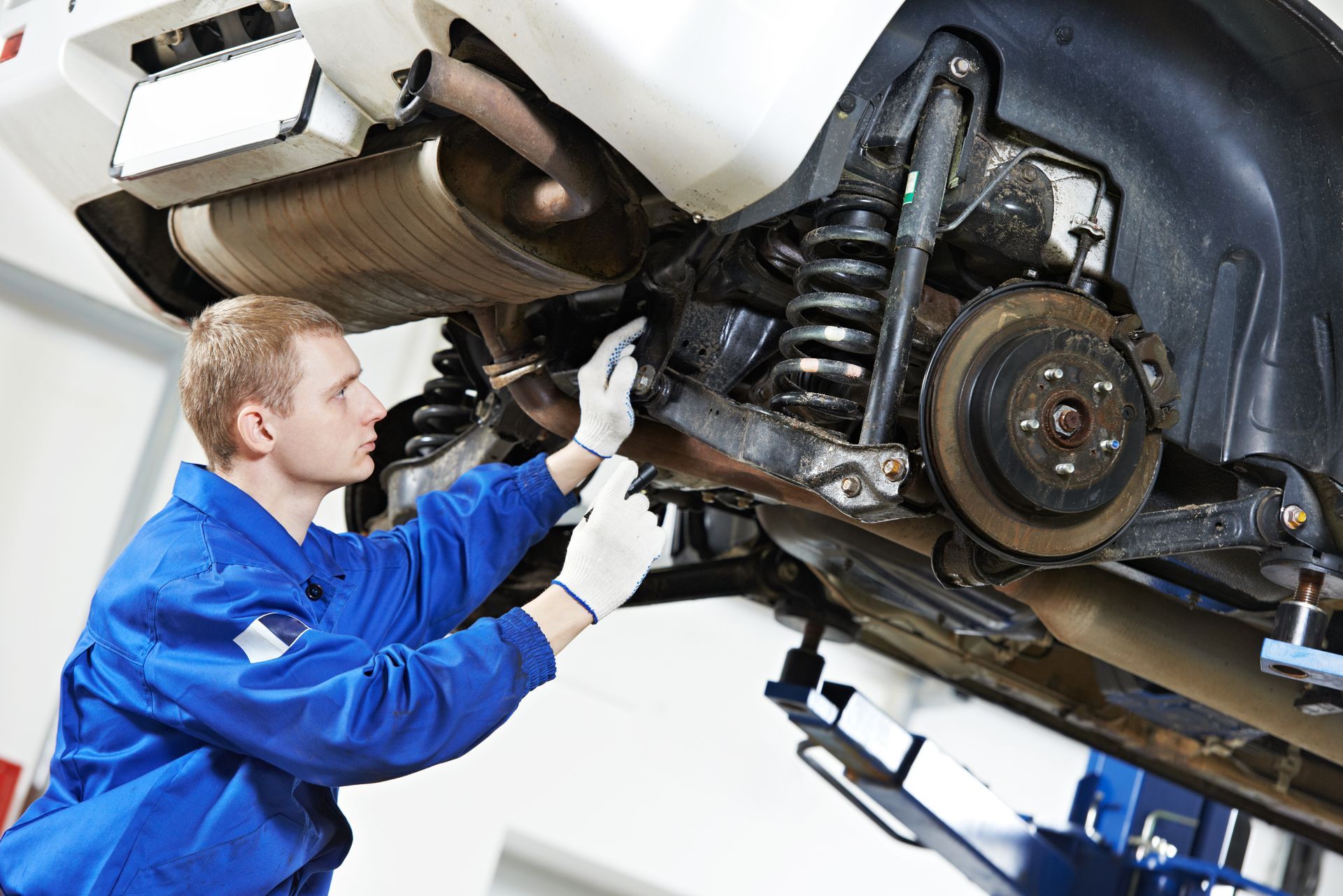
Diagnosis often begins with a road test over the type of surface that produces the symptom. The technician may listen during braking, turning, and low-speed travel over uneven pavement. The vehicle is then raised so joints, bushings, mounts, springs, links, shocks, and struts can be checked for looseness or damage.
Tires, wheel bearings, steering parts, exhaust mounts, and brake hardware may also need evaluation. Some noises appear only when the suspension carries the vehicle’s weight, so loaded testing or specialized listening equipment can be useful. Once the failed part is identified, the shop can determine whether an alignment or additional repair is needed afterward.
Get Suspension Repair In Spring, TX, With Best Auto Care
If your vehicle clunks, creaks, sways, bounces, or feels loose over bumps, Best Auto Care in Spring, TX, can evaluate the suspension, steering, tires, and related components.